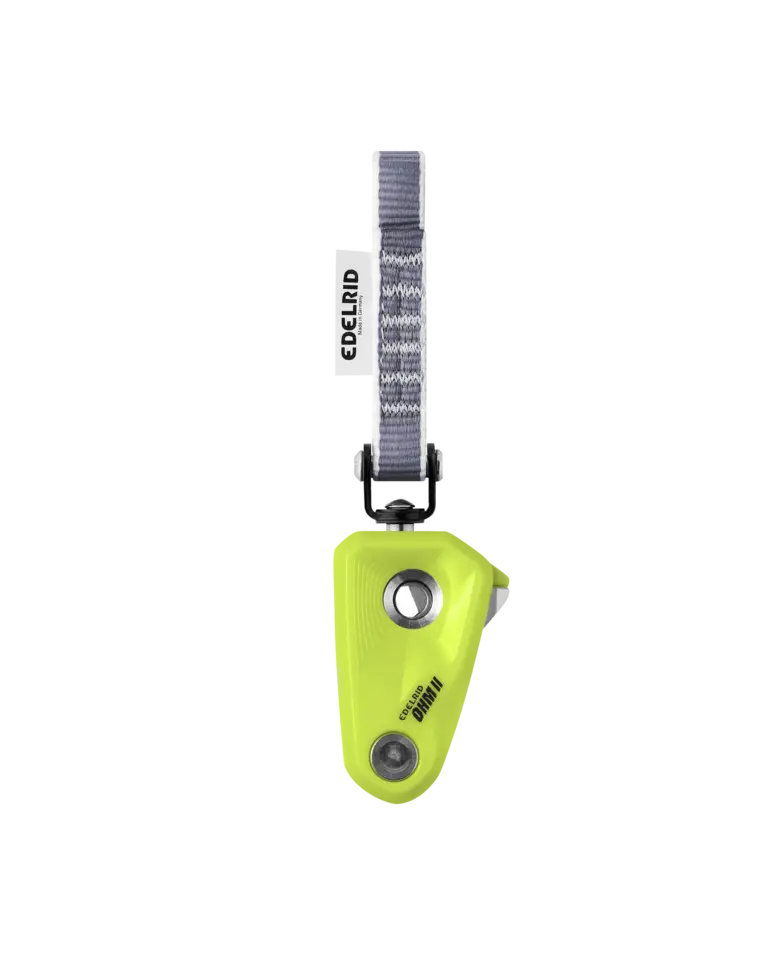
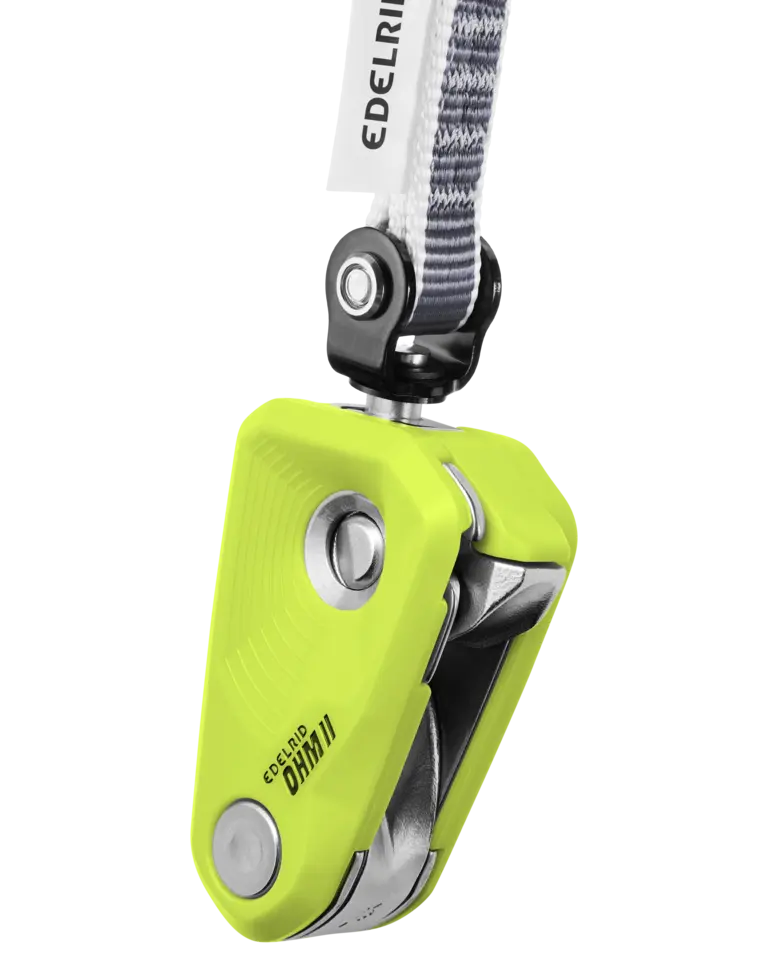
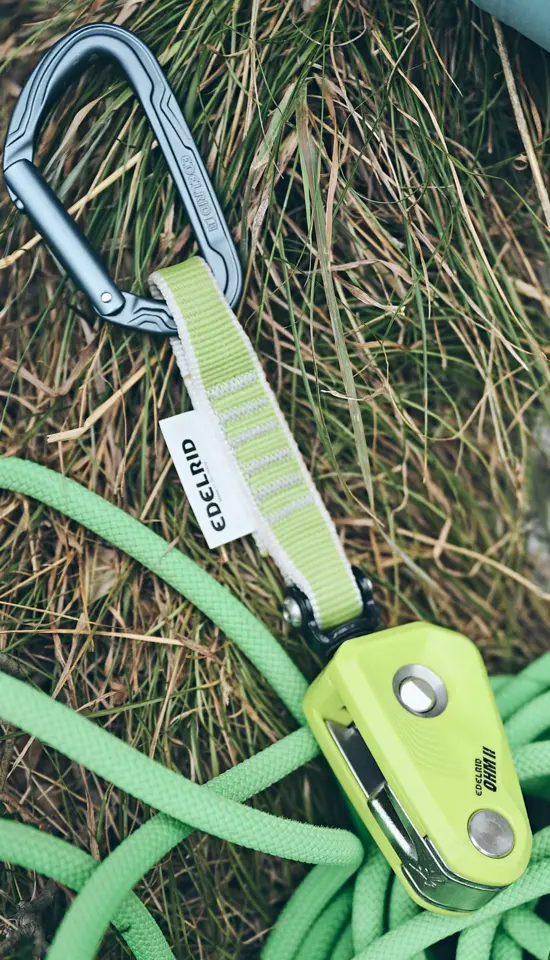
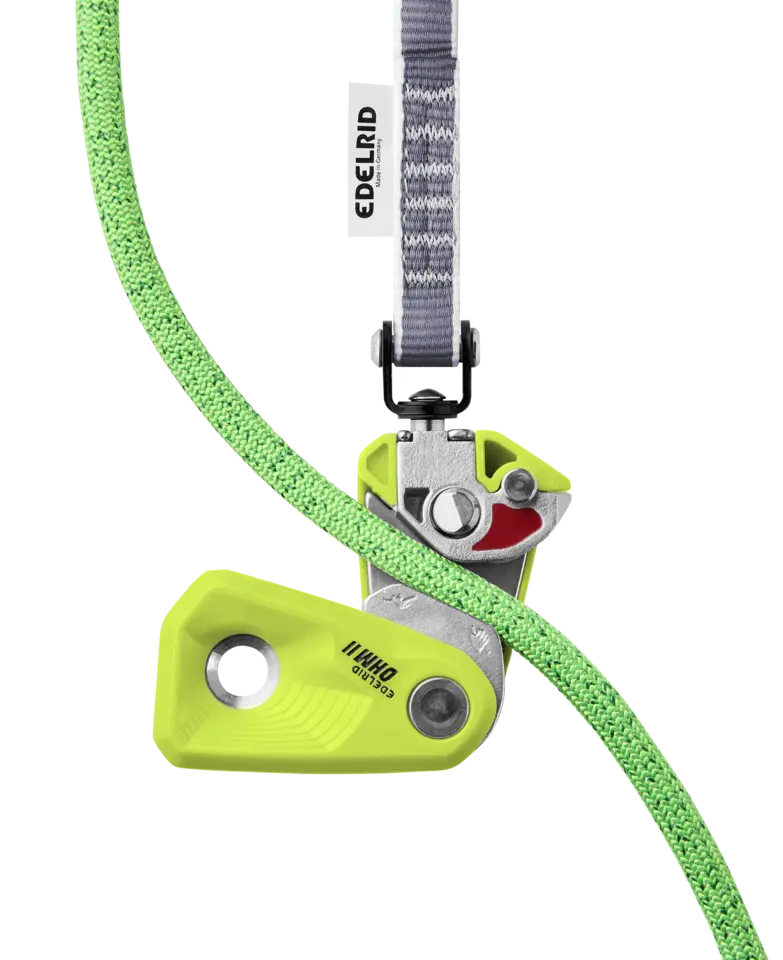
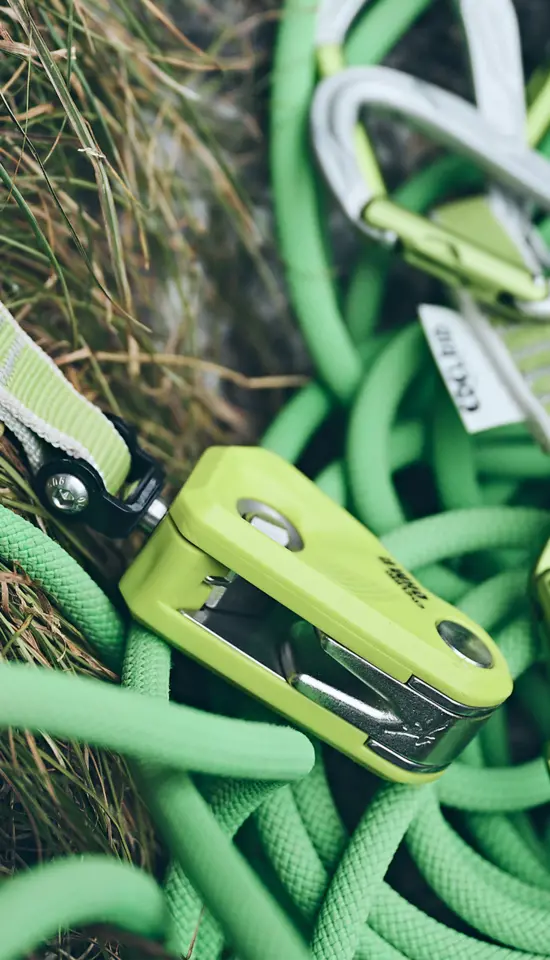
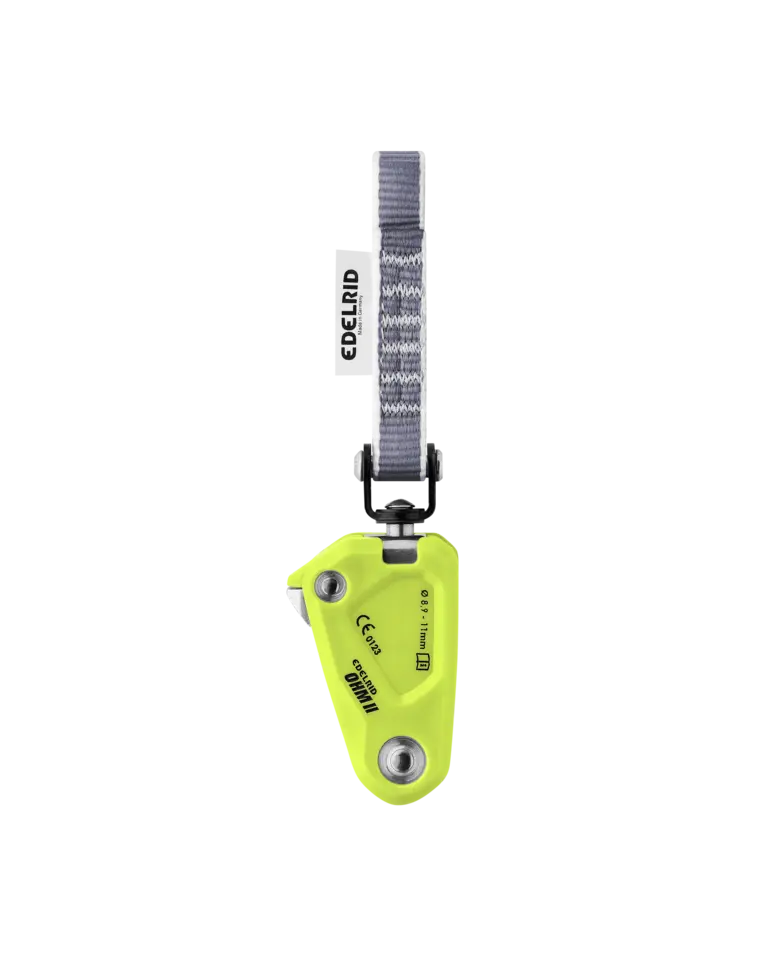
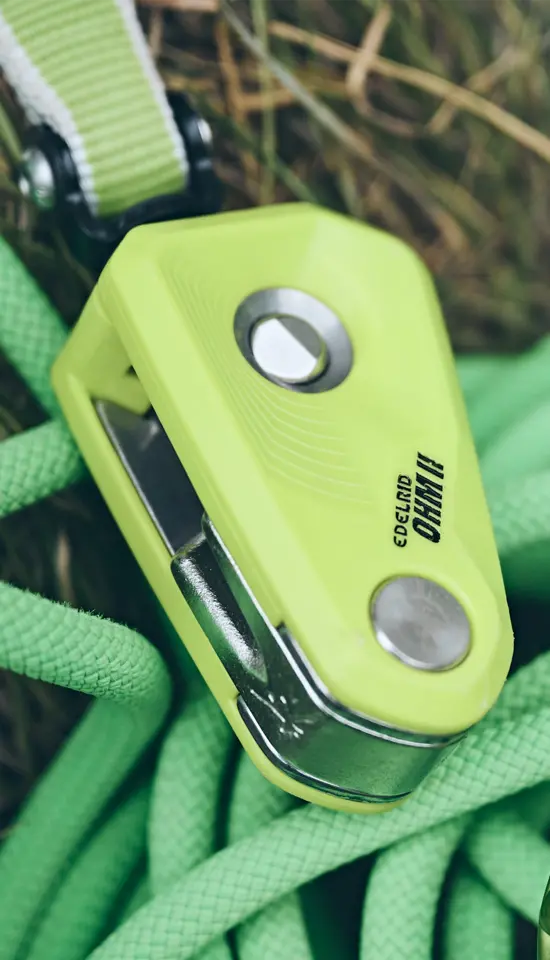
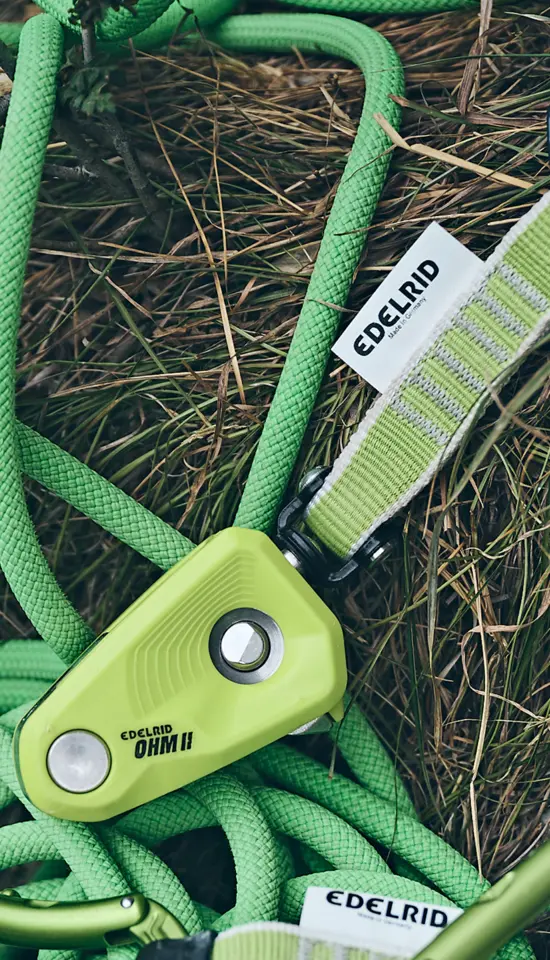
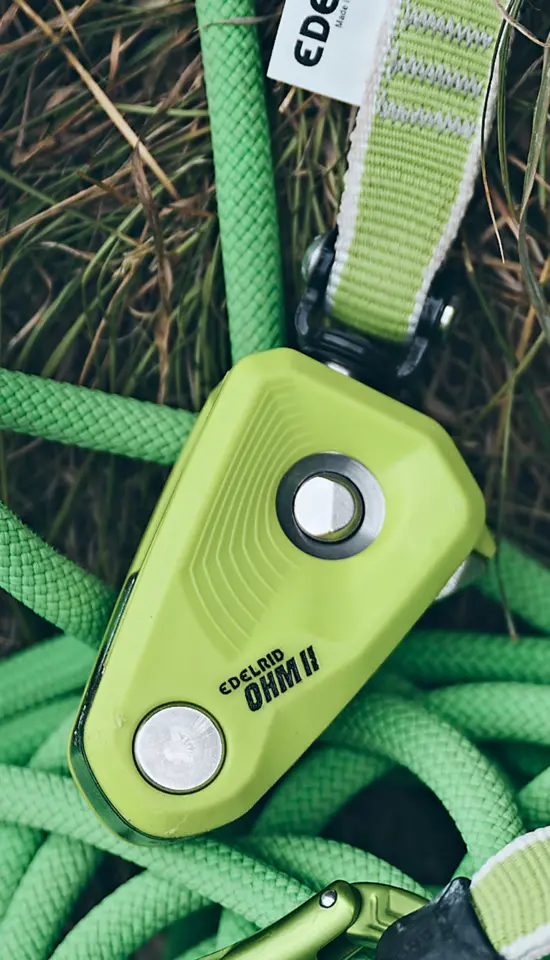
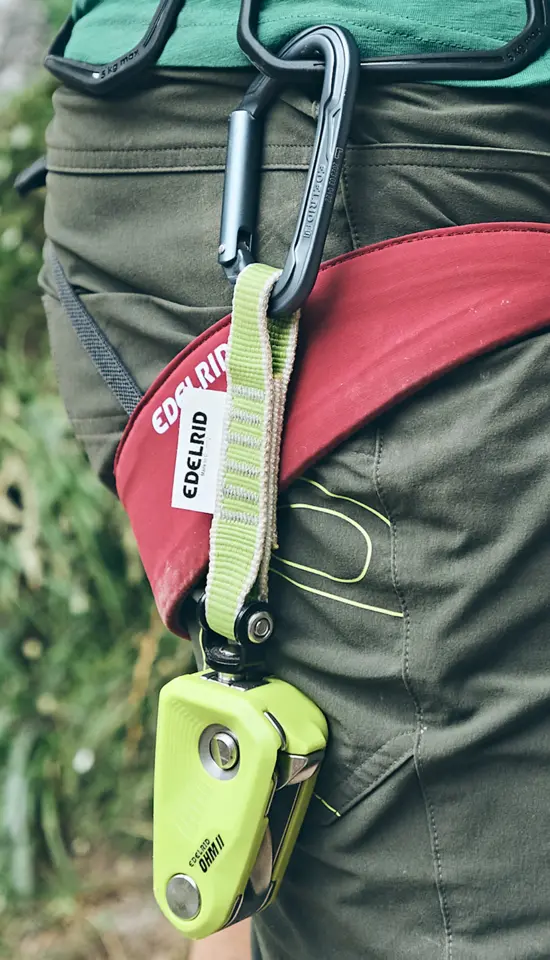
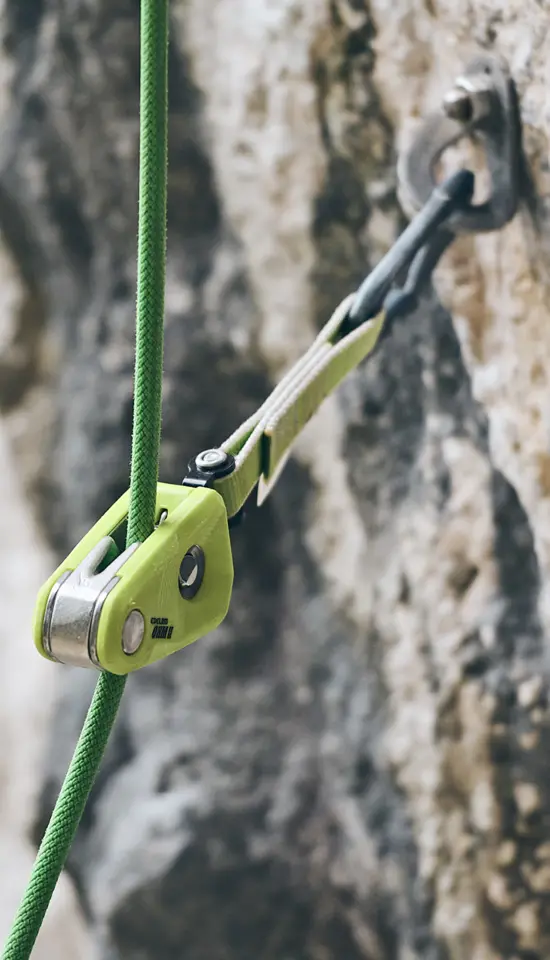
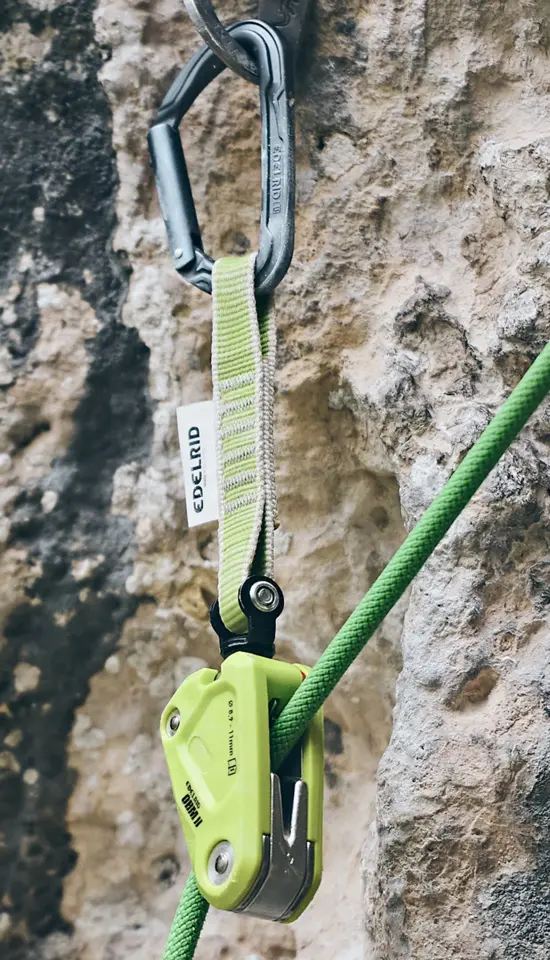
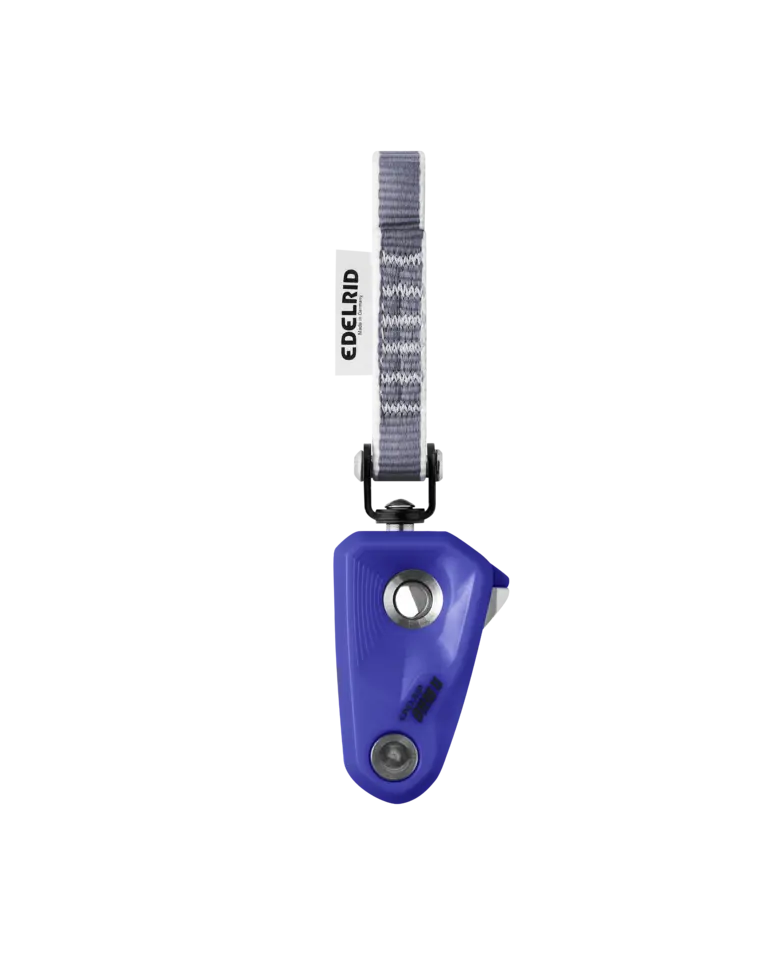
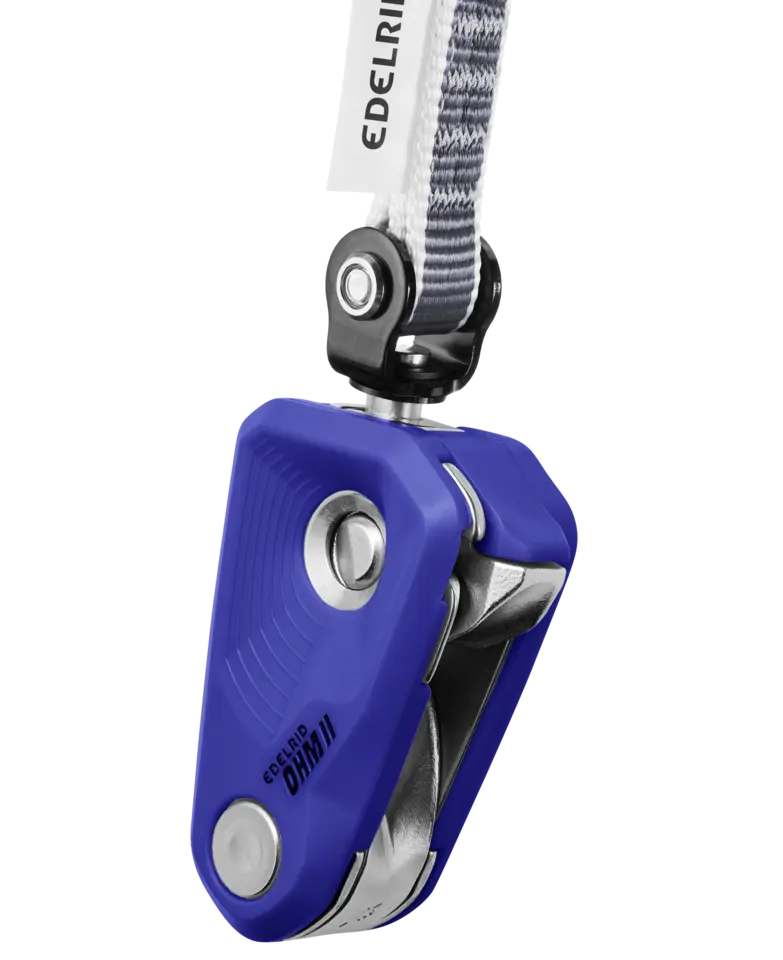
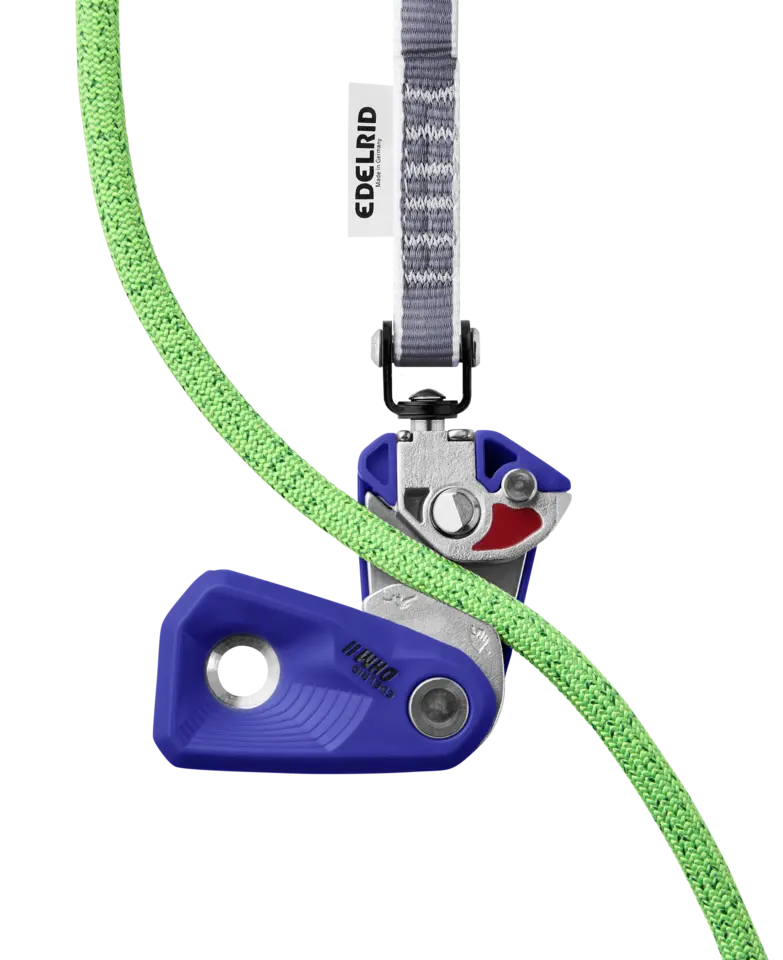
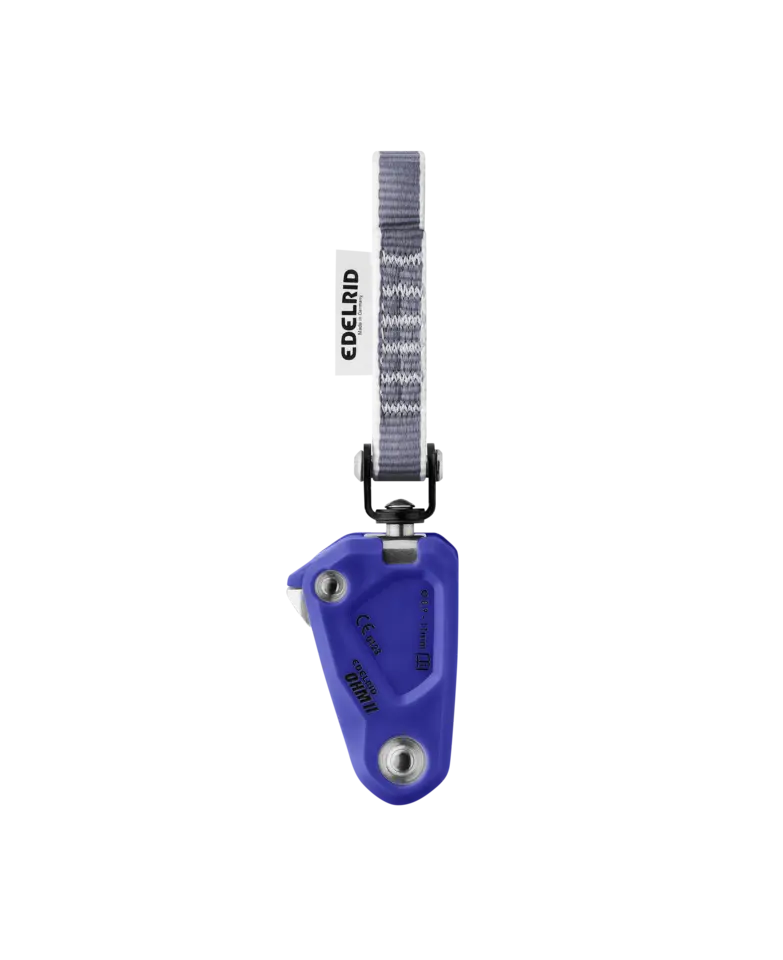
Get it out, clip it on, start climbing. The popular, tried-and-tested OHM assisted-breaking resistor is not only impressively easy to use but also outstandingly reliable and durable. The OHM is clipped to the first bolt using a carabiner of your choice (certified carabiner according to EN 12275 or EN 362). This can be done in any direction thanks to the swivel joint. The sophisticated closure system furthermore prevents accidental opening. It is also extremely easy to insert the rope and remove the device when lowering. Plus, there is no need to specially set the weight ratio. The OHM makes the belayer 25 kg heavier. It breaks even when falling directly into the device, supporting belayers weighing at least 40 kg. This reduces the risk of collisions close to the ground and stops the lighter belayer being pulled upward uncontrollably. Its design and high steel content make the OHM particularly durable. All in all, the OHM offers an important and extremely easy-to-use safety reserve for all rope parties with major weight differences. It is made for innumerable uses when sport climbing at the crag and in the gym, as well as ideal for rental usage.
-
Description
-
Features
- Far lower forces are exerted on the belayer if the leader falls
- Lowering a heavier person in a controlled manner is far easier
- OHM is attached at the first bolt in the safety chain
- Brakes even when falling directly into the device (active load) and reduces the risk of collisions and hitting the ground
- Rope handling when belaying a lead climber not affected (no additional friction when paying out rope)
- “Makes the belayer 25 kg heavier”
- Minimum belayer weight: 40 kg
- For carabiners according to EN 12275 and EN 362
-
Technical information
- Approved rope diameter: 8,9 - 11 mm
- Material: Aluminium, Steel, Polyamide, LDPE
- Manual
-
PDF downloads
-
Safety instructions & manufacturer information
- This product is part of personal protective equipment (PPE) and/or warnings and safety information are available for this product. Please refer to the instructions for use.
- Manufacturer: EDELRID GmbH & Co. KG | Achener Weg 66 | 88316 Isny i. A. | Germany | www.edelrid.com
Climbing partners with a significant difference in weight?
If there is a significant difference in weight between lead climber and belayer this frequently causes problems. This applies in particular to climbing couples, where the woman is often significantly lighter than her partner.
In the event of a fall, a lighter belayer can be suddenly pulled off the ground and hurled against the wall. In addition, when a belayer is pulled high off the ground, this significantly increases the distance that the climber falls. If the climber is still near the ground, belayer and climber might collide. In the worst-case scenario, the climber might hit the ground.
Using a weight bag to reduce the difference in weight is not possible all the time (nobody wants to carry a weight bag to the crag). In addition, weight bags restrict a belayer's freedom of movement. And even when using a weight bag, the belayer still has to supply the full braking force (with the associated risk of friction burns as the rope runs through belay device).
Our innovation to compensate for significant difference in weight between climbing partners
The design of the Ohm was underpinned with scientific research at the Institute of Mechanical Handling and Logistics (IFT), Stuttgart, Germany. It is an assisted braking resistor which is attached to the first bolt in the safety chain. In the event of a fall, the rope is pulled into the braking unit of the device and the fall is progressively arrested. This means the OHM does not brake the rope abruptly, but incrementally, so that the fall can be dynamically caught by the belayer. The OHM increases the friction in the safety chain, regardless of which belay device is used. This means the belayer has to apply considerably less manual force to the brake-side of the rope and is not suddenly pulled upwards or against the wall.
Due to its design, the OHM in no way restricts the handling of the rope for the lead climber. It does not increase the friction for the lead climber, nor does it negatively affect paying out the rope. The braking performance only comes into effect if a fall occurs. Due to the increased friction, lowering a heavier climber is also much easier to contol. Therefore accidents when lowering can be avoided.
In this way the OHM assists both the belayer and the lead climber.
The belayer will no longer be slammed against the wall. The lead climber can go right up to their climbing limit, with the reassuring knowledge that the belayer can secure them or that the landing will be soft.
The German Alpine Club (DAV) recommends that a lead climber should weigh a maximum of 10 kg more than the belayer (for example, belayer 60 kg/climber maximum weight 70 kg). If the lead climber is more than 10 kg heavier than the belayer, then weight or friction-enhancing measures are recommended.